
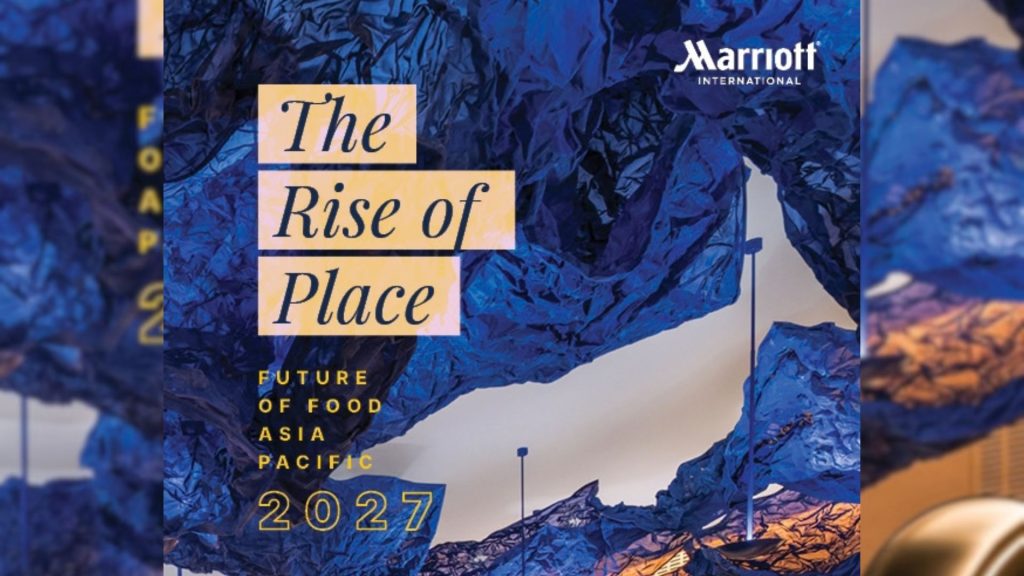
Local flavors, flexible dining spaces, shorter fine-dining experiences, and wellness are changing the way people eat across the region.
Dining in Asia Pacific is becoming more local.


Marriott International’s Future of Food 2027 report found that travelers are looking for authentic food and experiences that reflect the places they visit. The report covers Asia Pacific excluding China and draws on insights from Marriott properties, chefs, hospitality experts, and regional influencers.


Local cuisine is leading the trend. Ninety-five percent of surveyed Marriott properties identified demand for authentic local signature dishes as the biggest trend in their market. It also ranks ahead of value for money when guests choose where to dine.
Hotels are responding with more regional ingredients and dishes. Four in five properties surveyed have introduced new local ingredients over the past year. These include Kyoto vegetables in Japan, Kampot sea salt in Cambodia, and indigenous spices across Southeast Asia.


Local flavors are also showing up in drinks. Nearly three-quarters of the properties surveyed said local ingredients are appearing more frequently on beverage menus. The demand is particularly strong in India and Indonesia, where interest in local signature cuisine was reported by 71% and 67% of properties, respectively.
Restaurants Are Changing, Too
The traditional restaurant is no longer the only place guests want to eat.
Bars, lounges, counters, and outdoor spaces are becoming more popular, with nearly half of the surveyed properties reporting increased demand for casual dining venues.

Vietnam has seen a particularly strong rise in bar and lounge dining, with 71% of surveyed properties reporting growth in the category.
Smaller venues are also gaining ground. Some new concepts are working with spaces that seat around 40 to 60 people, giving them a more intimate setting and a distinct identity.
Technology is playing a supporting role. Restaurants and bars are using AI for tasks such as menu development, marketing, staffing, and understanding guest preferences. In Thailand, 100% of the surveyed restaurants and bars are already using AI in their operations.
Fine Dining Is Getting Shorter


Fine dining is also changing its pace.
Long tasting menus with 10 or more courses are giving way to shorter meals with fewer dishes. Fifty-eight percent of surveyed properties said their average fine-dining experience now lasts between 1.5 and two hours.

Singapore is among the fastest-moving markets, with 85% of restaurants surveyed reporting an average dining time of around 1.5 hours.
Restaurants are cutting down the number of courses and adding more à la carte choices. In South Korea, one in five establishments have reduced their number of courses. In the Philippines, 30% of surveyed fine-dining restaurants have introduced à la carte menus.
The focus is shifting from the length of the meal to the quality of the experience.
Wellness Is Part of the Menu
Health-conscious dining continues to grow across the region.

Ninety-seven percent of surveyed Marriott properties in Asia Pacific excluding China serve dishes associated with health and longevity. Many of these choices draw from traditional ingredients and food practices found across the region.
Wellness is also moving beyond the restaurant. Hotels are adding healthier minibar choices and wellness-focused turndown offerings.


Plant-forward dining is another area gaining attention. Marriott plans to introduce its APEC Plant-Forward Program in 2027, making plant-forward dining part of its food and beverage operations across the region.

Alcohol-free options are growing as well. Forty-two percent of surveyed Marriott restaurants and bars reported higher sales of non-alcoholic beverages. The category now includes premium alcohol-free spirits and food-pairing options designed for guests who want something more sophisticated than a standard soft drink.
Food That Belongs to Its Place
The findings point to a dining scene that is becoming more connected to local culture.
For hotels and restaurants, that means looking closer to home for ingredients, talent, traditions, and inspiration. For travelers, it means more opportunities to experience a destination through what is served on the table.
In 2027, dining in Asia Pacific is set to become more local, more flexible, and more personal. The strongest experiences may not be the ones trying to look like everywhere else. They will be the ones that could only happen in the place where they are served.
Read the full Marriott International Future of Food 2027 report here.
News and images courtesy of Marriott International, Inc.
Lorin Gutierrez-Bektas is on the cover of STYLISH Magazine right now. In our latest cover story, discover how she’s carving her own path and challenging what success looks like for today’s generation.

Read the current Stylish Magazine cover story here.
Our #StylishPodcast episode featuring our September-October cover girl Jasmine Curtis-Smith is out. Watch it on Facebook and YouTube.

Stylish Magazine is “your source of self-love, style & inspiration” first introduced in June 2020. Our television series format, Stylish TV, once ranked one of the Top 50 Most Watched Multicultural Shows in the USA, can be streamed on iWantTFC and be watched on TFC (The Filipino Channel) in more than 50 countries. Watch it online here.
Style Visionary Network is a lifestyle-business online platform where #WeCreateVisionaries. Also introduced in June 2020, Style Visionary Network is also the digital home channel of media brands Stylish Magazine and Stylish TV.